The RISE Framework
RISE stands for Relationship Integrated Social-Emotional Learning. It grew out of years of work with participants of all ages.
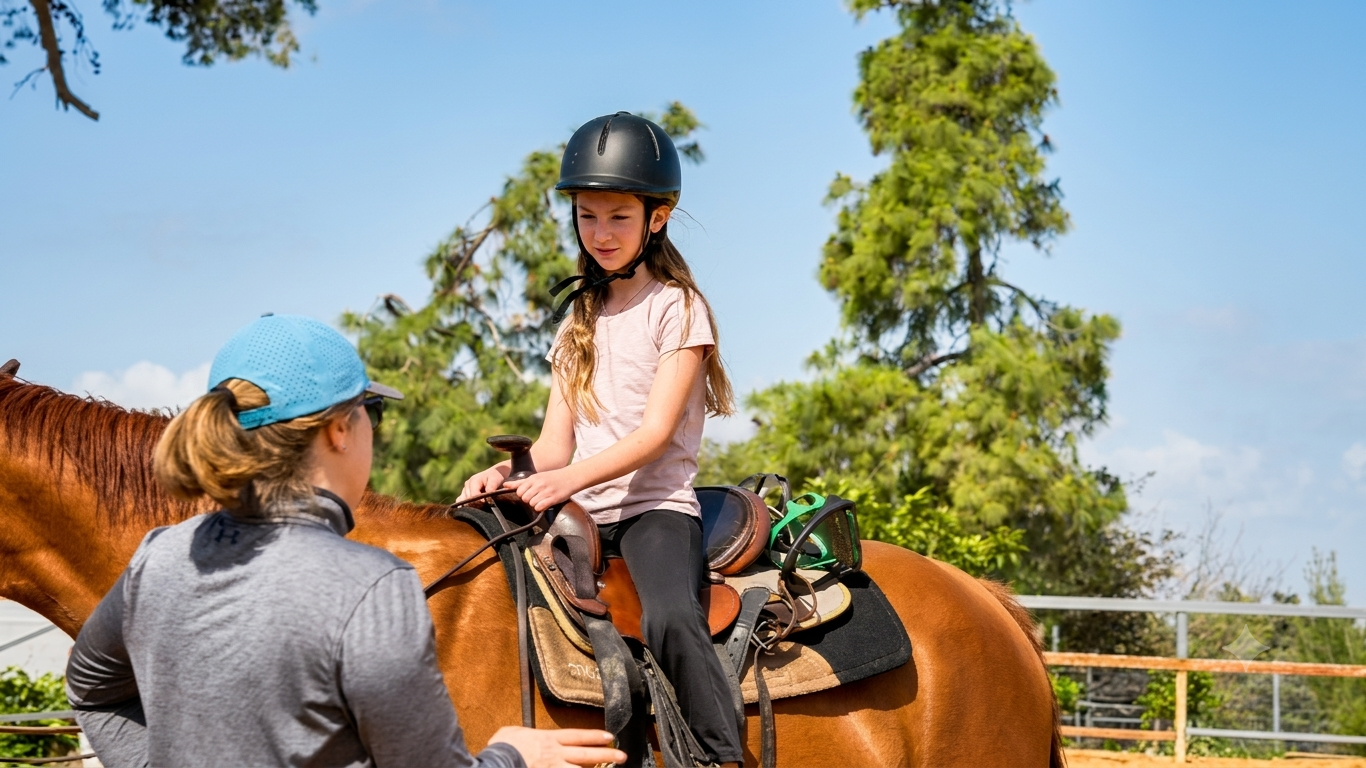
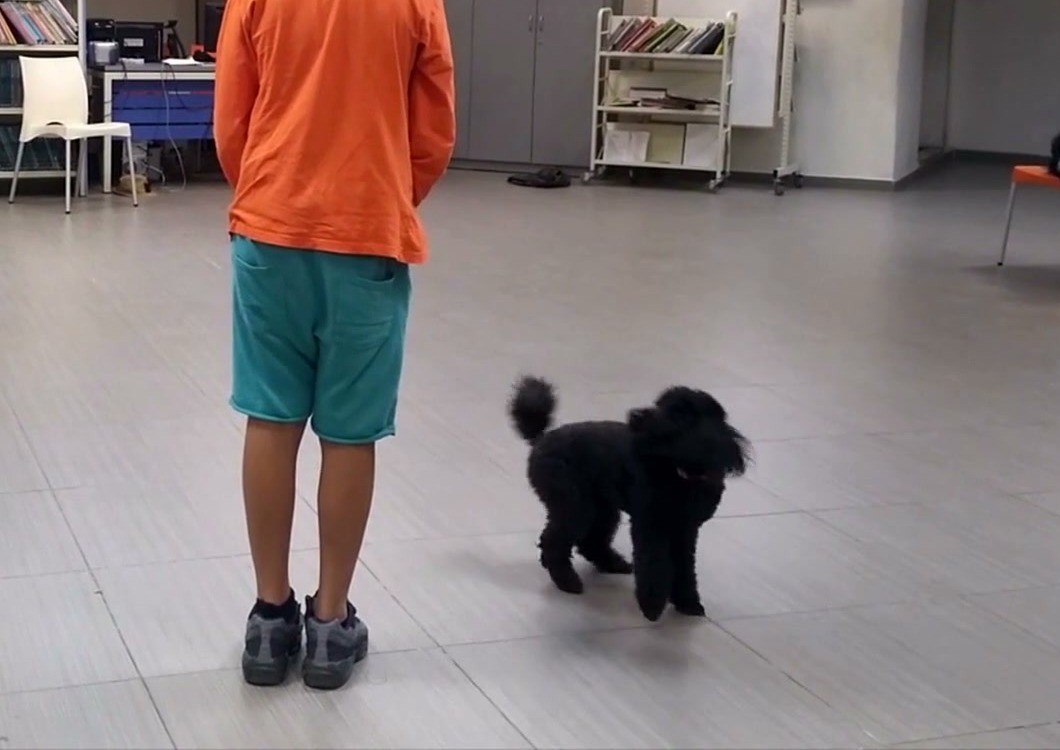
The idea is this. Every session, whether it’s a riding lesson or a dog training session, is also a chance to build the participant’s social and emotional skills. A RISE Certified instructor still teaches with their full professional knowledge and technique. What they add is one more layer: they point out the parts of the work that connect to the participant’s day-to-day life.
That layer focuses on five competencies, the ones defined by CASEL (the Collaborative for Academic, Social, and Emotional Learning) and used in American schools: self-awareness, self-management, social awareness, relationship skills and responsible decision-making. They’re what a kid uses with a friend who’s being unfair, at home when the answer is no, and at work twenty years later.
Most kids don’t need therapy. Every kid needs this. But a skill you only talk about doesn’t stick. It has to be practiced, with something real that answers back. That’s what the horse or the dog is for.
Self-awareness
What am I feeling right now?
Self-management
What do I do with it?
Social awareness
What is the animal telling me?
Relationship skills
How do we get working together?
Responsible decision‑making
What do I try next?
RISE treats the practitioner, the client, and the animal as one co-regulating unit. The animal is not a prop or a motivational reward: it is an active co-regulator whose honest, immediate responses become the raw material of the session.
Because the triangle, not the species, is the working unit, the same methodology currently runs in two applications: with horses, through RISE with Horses, and with dogs, through RISE with Dogs. It is one method scaling across two applications.
The method delivers social-emotional learning based on five pillars.
Structure
A lesson is built like a map, not a script. The instructor knows the destination and the steps that lead there, in order, and works on the step the participant is on today. Going back a step is part of the road, not a failure. Said out loud, it teaches setting a goal and deciding honestly when you’re ready for the next step.
Observation
Watching tells you that something isn’t working. Observation is looking on purpose, to find what isn’t working and where it’s coming from, before any correction. The structure tells the instructor what should be happening at each step, and the animal often shows what can’t be seen in the participant. Over time, participants learn to look at themselves, and at the animal, the same way.
Feedback
Feedback gives the participant two things: an understanding of what happened, and an understanding of what to do next. Regular feedback focuses on the outcome and the skill. RISE feedback also focuses on the competencies, and how they affect the way we manage ourselves and others.
Regulation
It’s hard to learn under too much stress, for people and for animals. Regulation gets the participant and the animal into a state where they can learn: something to focus on when they arrive carrying their day, and a step back to what they can do when stress builds up in the middle of a lesson. Over time, the participant learns to do it for themselves.
Integration
Feedback looks at one moment. Integration looks back at the whole lesson. Instead of giving more feedback, it deals with the way the participant experienced the lesson: where they made their biggest improvement, what they feel was the hardest part, and what they can take from it into the next lesson and into their day-to-day life.
RISE with Horses
RISE Framework education for riding instructors.
RISE with Dogs
Applying the RISE Framework to dog-assisted, social-emotional practice.